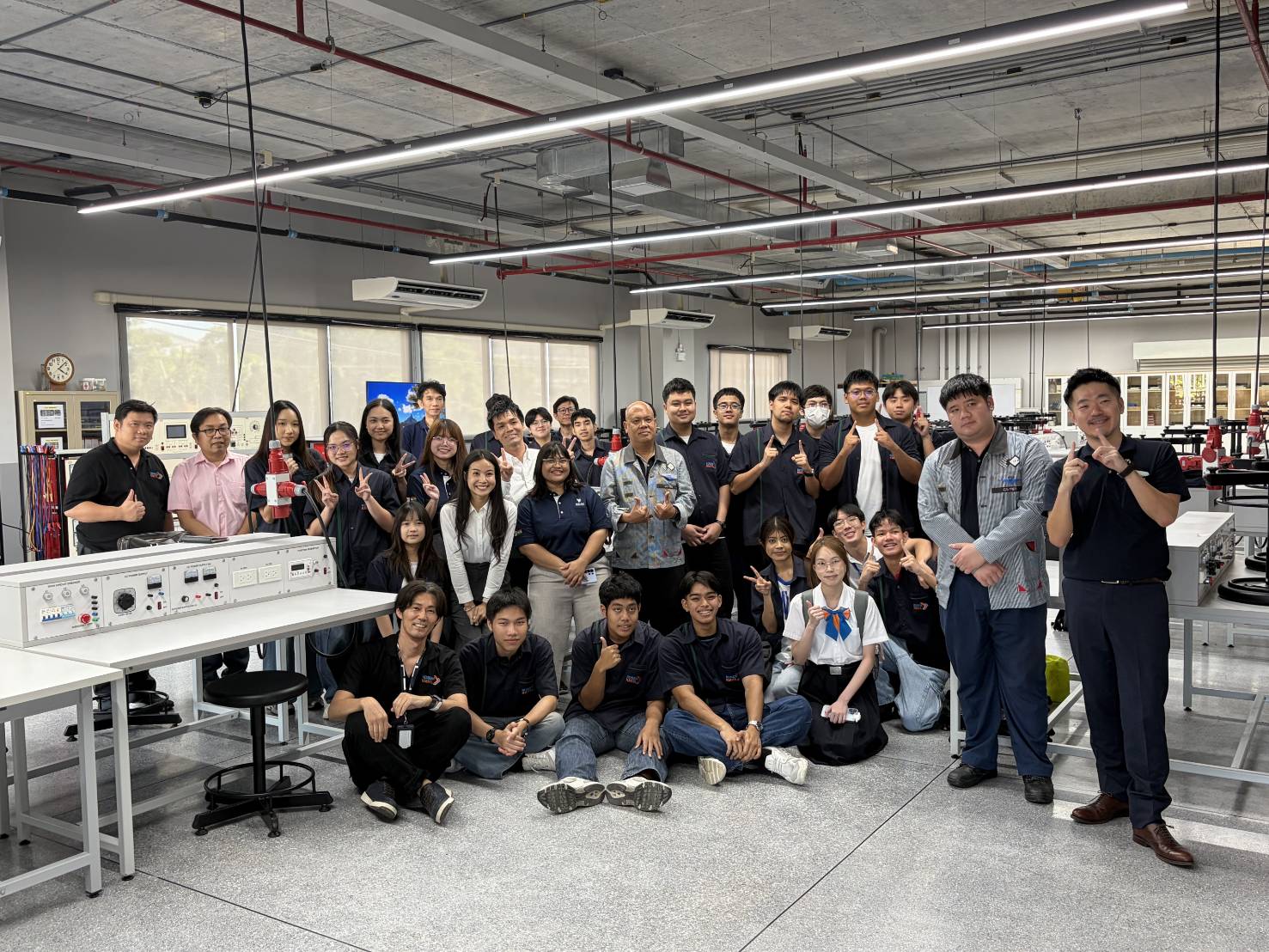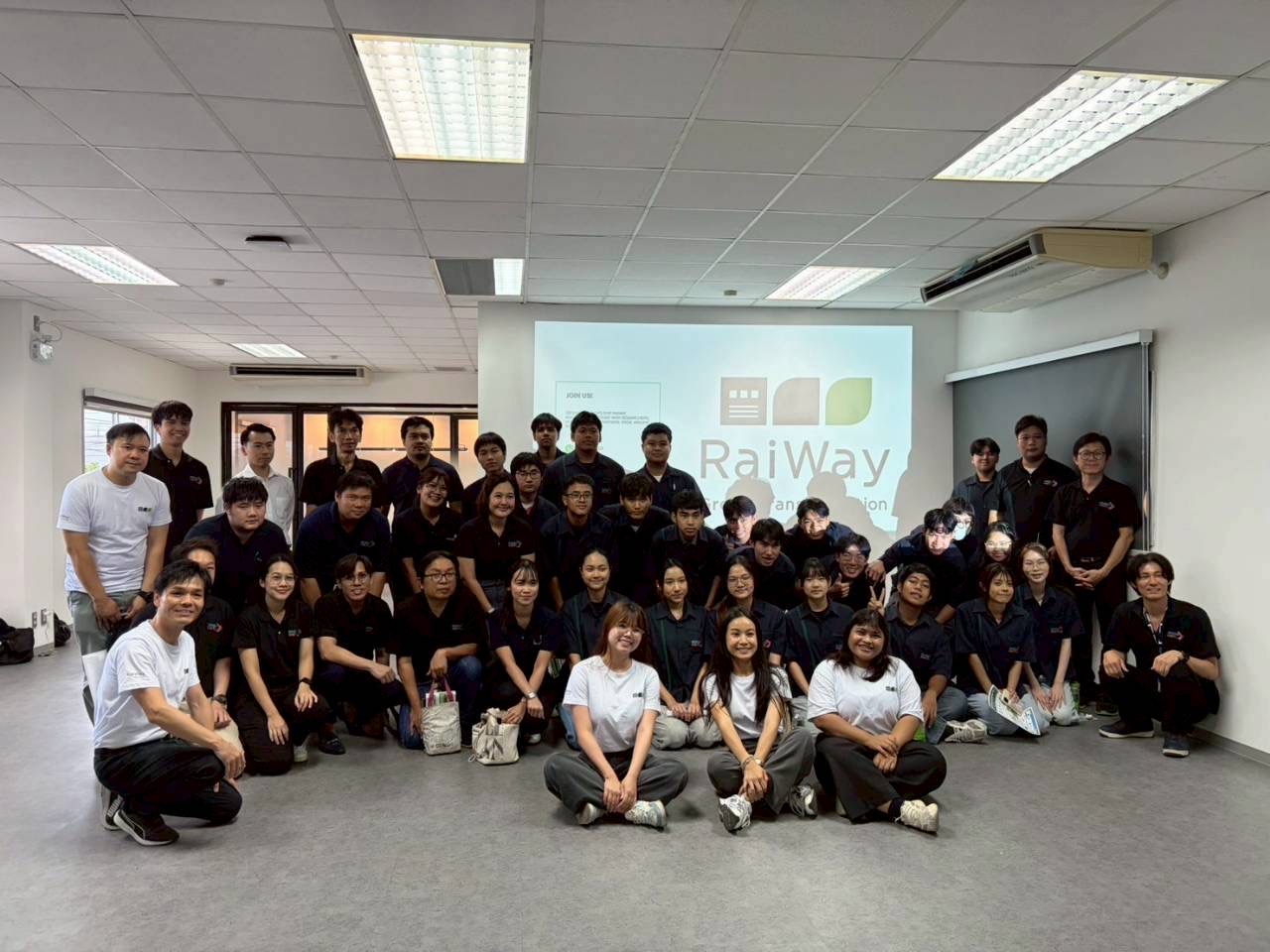
Fourth-Year KOSEN Students Visit RaiWay Project to Learn About Electrical Energy Measurement and CO₂ Emission Reduction Calculations
RaiWay is committed to promoting experiential learning by welcoming fourth-year KOSEN students to its demonstration plant for an industrial study visit. The program provided students with hands-on learning opportunities in agricultural processing technologies, energy management, and CO₂ emissions reduction calculations. This initiative was made possible through the collaboration of Nakamura Kiko (Thailand), YN2-TECH, CASTEM (Thailand), and Tomas Tech, reflecting their shared commitment to developing future engineering talent and driving innovation toward a more sustainable and environmentally responsible industry.
In June, Nakamura Kiko (Thailand) Co., Ltd. partnered with YN2-TECH Co., Ltd., CASTEM (Thailand) Co., Ltd., Tomas Tech Co., Ltd., and Kyokko Denki to welcome fourth-year KOSEN students at the demonstration plant of the RaiWay project in Chachoengsao Province. This initiative provided students with the opportunity to gain practical knowledge of industrial technologies and innovations through facility visits focused on agricultural product processing, food waste management, energy management, and strategies for reducing greenhouse gas emissions.
This collaborative effort emerged from partnerships with industry leaders Nakamura Kiko (Thailand), YN2-TECH, CASTEM (Thailand), Tomas Tech, and Kyokko Denki who are united in their commitment to developing engineering and technology professionals. Through knowledge transfer from industry experts to educational institutions, the initiative aims to prepare students for careers in the industry of tomorrow under the framework of Green Transformation (GX) and sustainable development
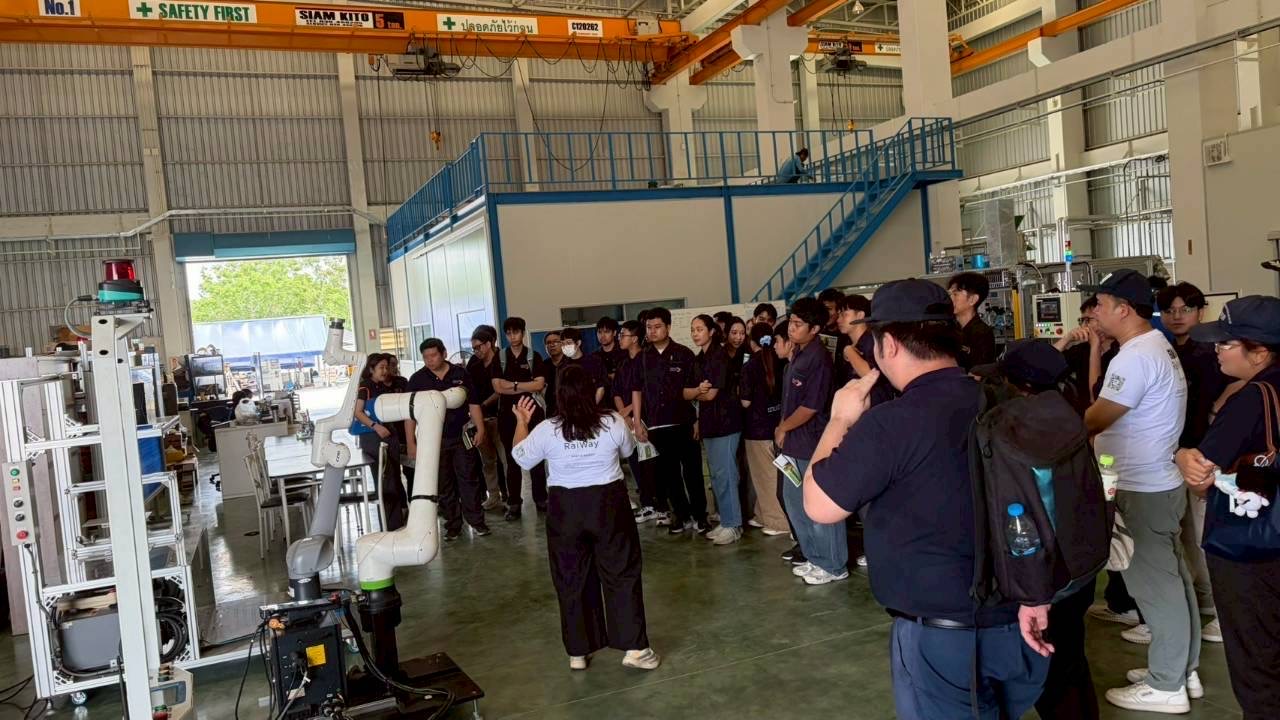
Visiting the RaiWay Project and Learning About Industrial Technologies
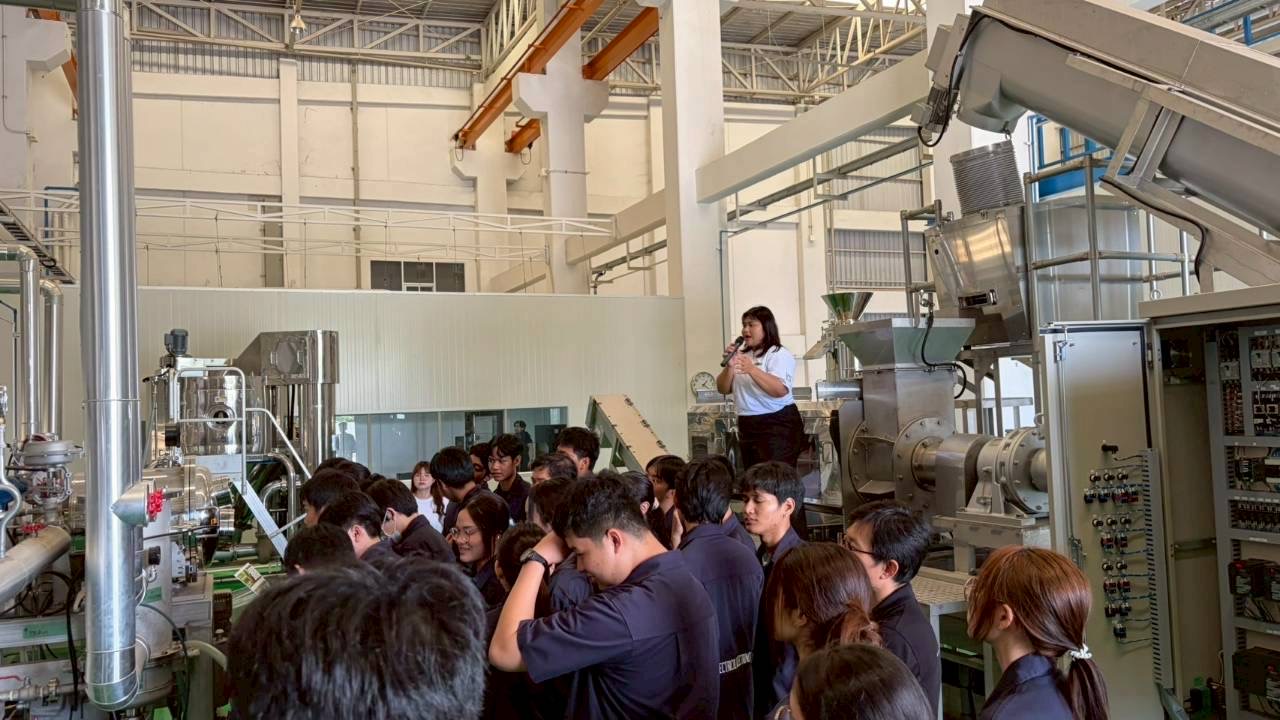
Students toured the RaiWay Demo Plant and attended lectures on the project’s concept, agricultural product processing workflows, food waste management systems, and value-added solutions derived from waste materials using cutting-edge technology.
Throughout the program, all five partner companies shared their expertise and practical experience from real-world industrial operations. Topics covered included manufacturing technologies, automation systems, energy-efficient practices, and environmentally sustainable factory development approaches. This exposure enabled students to see firsthand how industrial technologies are applied in actual business environments.
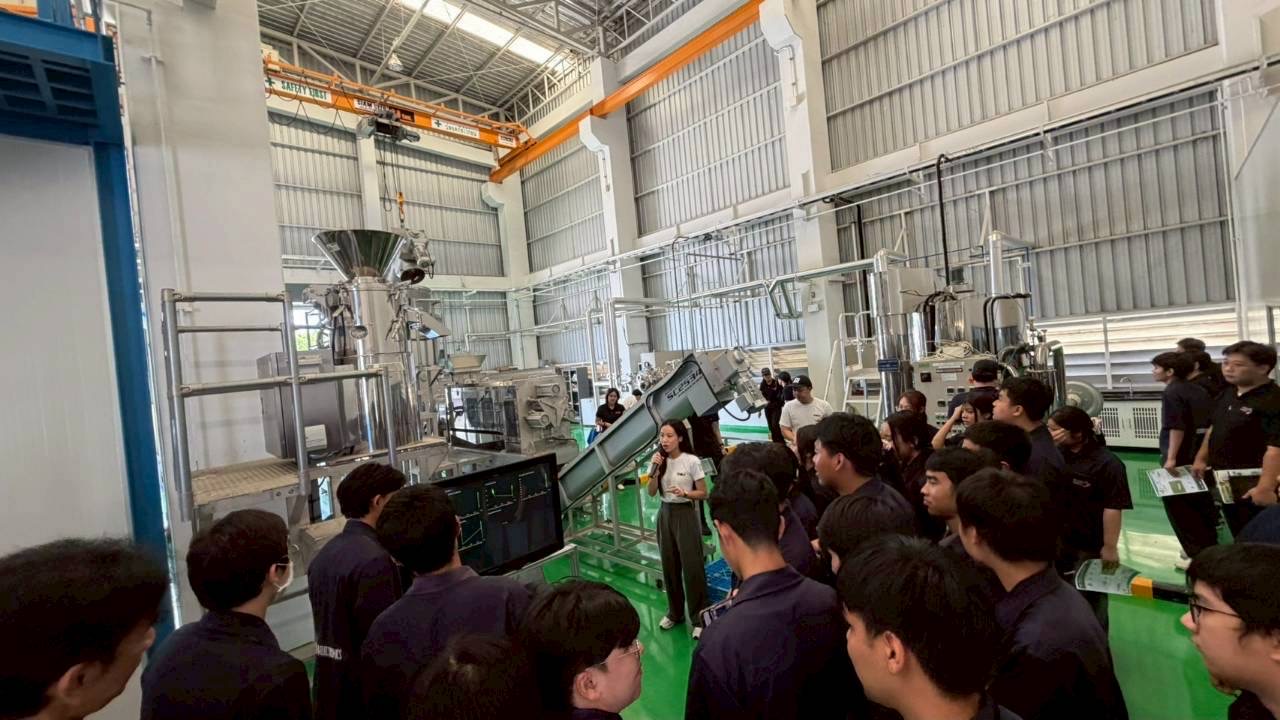
Learning About Electrical Energy Measurement and CO₂ Calculations
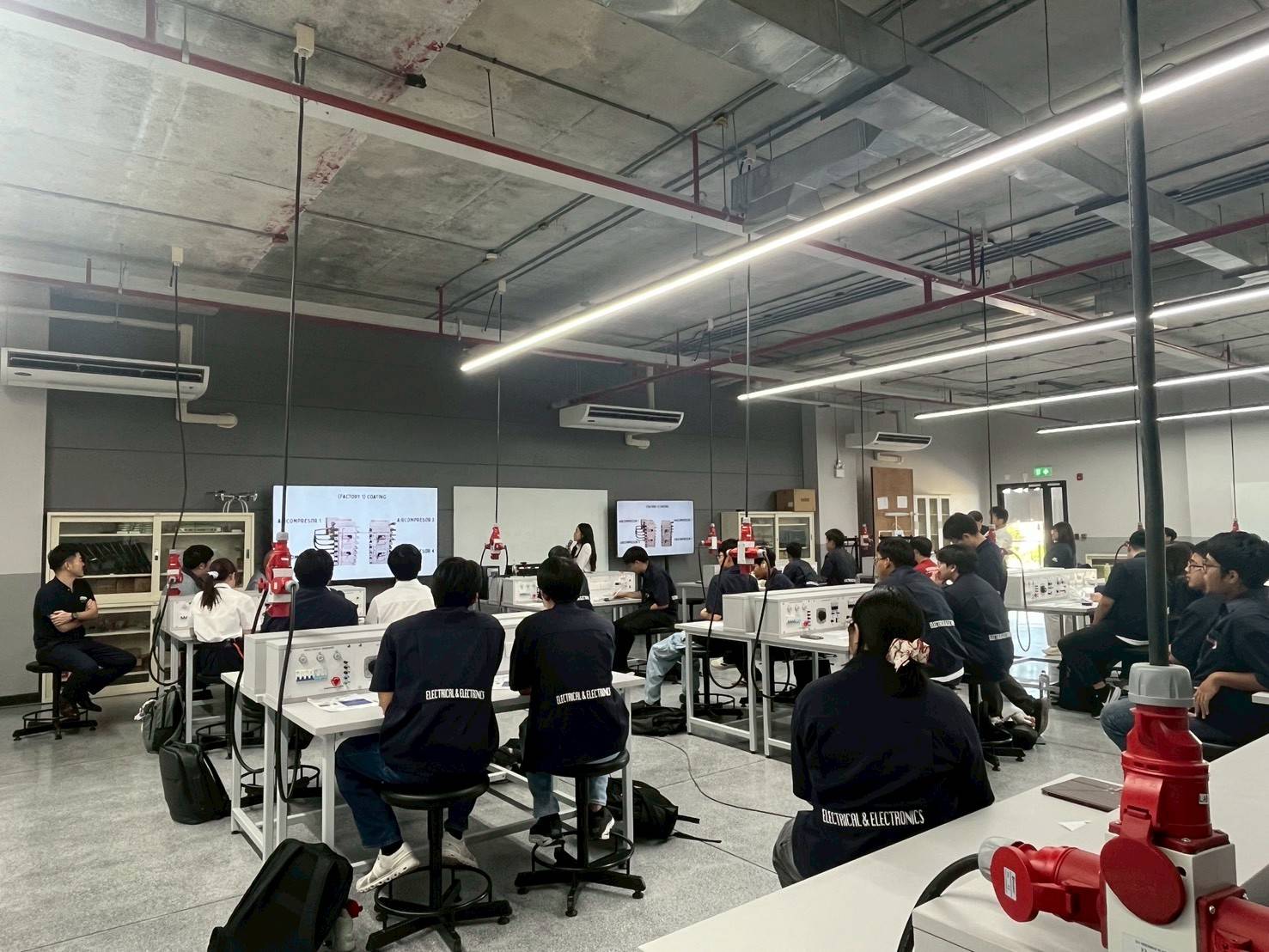
A key component of the program focused on knowledge transfer regarding electrical current measurement and energy consumption monitoring for industrial machinery. Students learned practical skills in using measurement equipment, collecting data, and analyzing energy efficiency performance through real-world case studies.
Additionally, the program included training on carbon dioxide (CO₂) emission calculation and reduction methodologies. Participants learned how to convert energy consumption data into Carbon Footprint assessments and evaluate strategies for reducing greenhouse gas emissions—essential knowledge for businesses operating under the Green Transformation (GX) framework.
Technologies Students Learned About
Throughout the facility visit, students gained practical knowledge of key RaiWay project technologies, including:
- Screw Press for separating solids and liquids from agricultural raw materials
- Evaporator and Spray Dryer systems for product value enhancement and shelf-life extension
- Upcycling Technology utilizing waste materials through 3D Printing and innovative fertilizer production methods
- Electrical Energy Monitoring Systems for analyzing energy efficiency in manufacturing processes
- CO₂ Emission Reduction Assessment Systems supporting Green Transformation (GX) initiatives and industrial sustainability
Industry-Education Collaboration
This facility visit exemplified the strong partnership among Nakamura Kiko (Thailand), YN2-TECH, CASTEM (Thailand), Tomas Tech, and Kyokko Denki in advancing the professional development of the next generation. Through knowledge sharing and technology transfer from industry experts, these companies are bridging the gap between academic learning and practical industry experience.
This collaborative approach aims to connect educational institutions with industrial practitioners, create authentic learning opportunities for students, and develop skilled professionals in engineering, energy, and sustainability. By doing so, these partners are preparing the workforce necessary to drive Thailand’s industrial growth and competitiveness in the future.